Nisan – 5776 (2016)

Now the LORD said to Moses and Aaron in the land of Egypt, “This month shall be the beginning of months for you; it is to be the first month of the year to you.  ~ Exodus 12:1-2

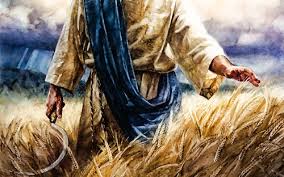
barley yeshua

Last year as we entered into the Hebrew month of Nisan I woke up to a song in my heart and on my lips… “it’s a new season, it’s a new day….a fresh anointing is flowing my way…a season of power and prosperity…..it’s a new season coming my way.”  And in prayer, I kept hearing God say “new day, new day!!”  Then He led me to Joshua 1:2 “Moses my servant is dead. Now therefore arise, go over this Jordan, you and all these people, into the land that I am giving to them, to the people of Israel.”   All of this happened in the Hebrew month of Nisan.  A new day had come for the children of Israel…  the old way of living (in the Wilderness) was over and it was now time to cross over into the Promise Land and receive all that God had promised them.

On this past Friday evening we entered into Nisan… on Saturday morning I woke up with an expectancy of something new.  It felt as if something in the atmosphere had shifted.  Saturday was also the day of Azusa Now in Los Angeles (which marked 110 years anniversary of the Azusa Street Revival) as well as United Cry DC in Washington DC.   East coast and West coast worshipping together and crying out to God on the same day for revival in our land!  A day of unity in the Body of Christ.

I believe we have entered into a new day… Saturday marked a day that everything changed… an historic day for us!  For our nation!  And not coincidentally it happened as we entered into the Hebrew month of Nisan.  The month of Passover… a time of liberation, personal change, going from slavery to freedom, and the emerging out of the old.

Saturday I believe we “passed over” into a new season… a season that has shifted us and positioned us for the next Great Awakening.  Rev. William Seymour, the leader of the Azusa Street Awakening, prophesied that in 100 years there would be an outpouring of God’s Spirit and His Shekinah Glory that would be greater and more far reaching than what was experienced at Azusa.

REVIVAL — A TIME OF GREAT AWAKENING IS UPON US!

Revival is defined as to live again, to receive again a life which has almost expired; to rekindle into a flame the vital spark which was nearly extinguished.  Another great definition I read is “The Spirit of God working through the Word of God, in the lives of the people of God.”

Passover (which is in Nisan) is a time of revival and spiritual renewal, a restoration of the Power and Glory….a renewed interest in God!  In Nisan the children of Israel shifted into a new season… a season of liberation as they followed Moses, the revivalist, out of Egypt.  The children of Israel had been enslaved for 430 years and in Exodus 6 God told Moses that He heard their groanings….and He responded to their prayerful cries and to the hearts of His people… there was a revival of His covenant with Abraham.

Zech 10:1 tells us to ask the Lord for rain in the springtime…. this month is a time to ask for the rain of His presence.  I loved that on Saturday the 8th (Azusa now and United Cry DC) it rained here in California and also in DC…. in fact my Facebook post that morning was Hosea 6:3 “He comes like the rain”.  That day on Facebook I saw two different photos of rainbows… one over the colosseum in LA and two double rainbows a few days before over the Washington monument and the US capital.

It is also the month that the King had favor on Nehemiah and granted him permission to return to Jerusalem and rebuild the wall.  This was another time of revival for Israel…. in Nehemiah chapter 8 the people gather as Ezra reads the Word of God.  They stood listening to the Word for about 6 hours!! Then they began weeping, because they realized how much they had sinned against God…. they were repentant…  and worshipping God after it was read…. their hearts were revived and turned back to God.    Again, this happened in the month of Nisan.

It is also month to watch your speech.. be aware of what your confessions are.    Your Word confessions should “grab the wind” and change the atmosphere. Speak forth revival… in your life, your families, your city and your nation!  


~ Robin


No Hebrew word for obey

I was reading an article by Rabbi Daniel Lapin, and he said that there is no Hebrew word for “obey.”  I always just assumed the actual word ‘obey’ was in the Hebrew Bible….it’s translated in our English Bibles, and it’s definitely in most sermons that are preached.   I did some further research, and sure enough, there is no word in Hebrew for our English word ‘obey.’  The word translated obey in our Bibles is the Hebrew word “shema.”

Don’t get me wrong, I’m not against obedience, and I’m definitely not advocating for disobedience.  I am one of those people that obedience just comes naturally to.  I was an extremely obedient kid… to the point of losing a cat once… but that’s another story for another blog!  I also like rules…truthfully I LOVE following rules and setting them.  In fact, my kids and husband call me the rule maker! I’m sure they mean it as a term of endearment… right??

Just as there is no Hebrew word meaning “obey,” there also is no English word for shema.  While this Hebrew verb translates as “hear” it means much more than just hearing or listening. The King James Bible chose the verb ‘to hearken’ rather than hear. But now, nobody hearkens anymore so the English translators of the Bible didn’t know what to do with this verb. So they translated it as ‘obey’.

keys bible

But “obey” poses a problem…before we obey we usually go through a 3 part process.

  1. We hear what God says
  2. we evaluate the command based on our understanding
  3. we make a choice to obey based on our evaluation.

That’s a Greek mindset to understand first then obey.  But God doesn’t give us instructions in order that we might understand Him!  He gives His instructions to us that we might live life well…  Proverbs 10:17 “Whoever heeds instruction is on the path to life.”

There are 613 commandments in the Old Testament and 1050 commandments in the New Testament.  With so many “commandments” you would naturally assume that obedience is what God is requiring.  But He’s not looking for obedience from us the way we understand obedience.

Webster’s Dictionary defines obey as to do what someone tells you to do or what a rule, law, etc., says you must do.  Some synonyms are to submit, to keep, to comply, to be governed by, bow to, do one’s bidding, do what is expected, do as told, to take orders.  Lots of English synonyms for a word that’s not even in the Hebrew language.

IF NOT OBEDIENCE — WHAT IS GOD LOOKING FOR?

So, what does God require from us?  He’s looking for shema levot….for hearing hearts.  A hearing heart is a heart that is intent on… or committed to… doing whatever God commands… whatever He asks from us.  And most importantly a hearing heart is rooted in love (Deut 11:1; John 14:15; 1 John 5:3).

The first time “shema” appears in Scripture is in Genesis 3:8. “And they heard (shema) the sound of the LORD God walking in the garden in the cool of the day, and the man and his wife hid themselves from the presence of the LORD God among the trees of the garden.”

Adam and Eve had just sinned and eaten from the tree of the knowledge of good and evil.  This scripture shows us God’s response to them in spite of their sin… in spite of them not following their hearing hearts and doing what God required of them. God came walking through His garden in the cool of the day.

The word walk is halak; it has the idea of moving or going as opposed to just sitting there.  The term “cool of the day” wasn’t just added as a poetic phrase, the word cool is the word ruach which is the word for spirit.  

Immediately following their disobedience they “heard”(shema) the Spirit of the Lord in the Garden ready to walk with them… eager to enjoy fellowshipping Spirit to spirit with them. They heard His Spirit come into the garden desiring to be with them like always.

To hear (shema) is hearing with understanding, attention, and with a response.  Response to what?  To come to Him and walk with His Spirit as usual.  Allowing the wind of His Spirit to blow over them and make things right.

Our translations then tell us that God said “where are you?”  Actually, in the Hebrew it is a Semitic idiomatic expression meaning “he is nowhere.”  God wasn’t asking a question; He wasn’t asking where Adam was.  He was crying out “Adam is nowhere in My heart.”

This is not a picture of an angry God who is looking for Adam so that he can punish his “disobedience”… this first look at sin for us is a picture of a caring Father so sad that His son left His heart.

Today let’s have hearing hearts, let’s respond to Him, walk with His Spirit, committed to doing whatever He asks.  Today let’s be hearers and doers.

~Robin


Joy

Joy is to abound the entire Hebrew month of Adar…. and this year because it’s a leap year we get 2 months of Adar… double the joy!   Joy is not the same thing as happiness… they are vastly different words!

Words are powerful.  I’m one of those mom’s who is constantly correcting her kids on their grammar as well as the words they use.  I ask them “is that really what you mean to say?”  Proverbs 18:21 in the New Living Translations says “The tongue can bring death or life; those who love to talk will reap the consequences.”  Since I am definitely one who LOVES to talk, I want to make sure that I’m reaping good consequences.  That’s why I love studying words in English, Latin, Greek, and Hebrew… really digging out the meanings.  So that I know exactly what I’m saying.

Choosing joy this month is much easier if you know the difference between joy and happiness.

Happiness is from the Middle English word meaning “hap” or “chance”… based on outward happenstances.

Joy comes from the Middle English from the French Anglo word “joie” meaning rejoice! I love that! The Apostle Paul thought it was so important to rejoice that he felt the need to repeat it twice… “Rejoice in the Lord always. I will say it again: Rejoice!”   In fact, Paul talks about joy at least 16 times in the 4 chapters of Philippians.  

King David also exhorts us to serve the Lord with joy… Psalm 100:2 “Serve the LORD with joy. Come before him with a joyful shout!”  This exhortation wasn’t borne out of “happy” circumstances… he was at the time hiding in a cave, exiled from his throne, having barely escaped from the murderous intentions of his power-hungry son Absalom. What a rough set of circumstances!  And yet David chose this moment to compose a psalm of rejoicing.  

Joy is a deep down confidence that all is well, no matter what the circumstance, no matter what the difficulty, no matter what the problem.  Jewish sages have a saying, “simcha poritz geder” — joy breaks all barriers.  

Joy is a gift from God… Psalm 4:7 says Thou hast put joy in my heart”  The Greek word for “joy” is chara (χαρὰ), it’s a word related to “grace” (χάρις).  There is grace for joy available for us….. we need only spend time in His presence to be full of joy (Ps 16:11).

Today rejoice…. choose joy whether your circumstances are joyful or not….

  • get into His presence and let Him fill you with His joy (Ps 16:11))
  • let it strengthen you (Neh 8:10)
  • causing you to superabound with hope (Rom 15:13)

and that joy will break down any barriers in your life.

joy 2


I recently read a wonderful definition for joy:  joy is the flag that flies on the castle of the heart when the King is in residence there.  

~ Robin

Enemy of Israel…. healed!

naaman the syrian   And there were many lepers in Israel in the time of the prophet Elisha, and none of them was cleansed, but only Naaman the Syrian.”  When they heard these things, all in the synagogue were filled with wrath   ~ Luke 4:27-28

I started this blog post 2 weeks ago but a death in my immediate family forced me to put my study on hold.  Now that life has resumed back to normal, I’m excited to start blogging once again.  

We had been talking about Jesus’ teaching of Isaiah 61:1-2 in the past two blogs (see Jesus is our Jubilee and The widow of Sidon) and the people of Nazareth’s response to His teaching.  He was revealing to them that He had come to be a light and a blessing… to show forth His salvation… to the Gentiles (unbelievers) as well as the Jews.  

He was reminding them of their covenant responsibility to co-labor with Him in being a blessing to ALL the families of the earth (Genesis 12:3)…. He had blessed them to be a blessing… and to release that blessing to ALL we come in contact with.  

This example that He gave was unthinkable to their natural reasonings!  The widow represented Gentile sinners which was bad enough….. BUT Naaman represents much more than that… he was the captain of the Syrian army… the Syrians oppressed Israel.  They were enemies of Israel.  Much in the same way that the Romans were the oppressors of the group sitting and listening to Jesus.  

Surely Jesus wasn’t asking them to be a light and a blessing to their oppressive enemies, was He?  

Remember, God’s heartbeat is for the nations.  He was so intent on showing the Israelites His love and compassion for ALL people, and that ALL people can have faith in God, that He chose one of the most hated men in Israel at that time to prove it.  God in His mercy pursued Naaman…. there were MANY lepers in Israel but none of them were healed except Naaman the Syrian (Luke 4:27)  

The Syrians were always terrorizing and attacking Israel and then taking prisoners back to Syria… and on one of these raids, Namaan carried off a little girl from Israel and made her his wife’s servant (2 Kings 5:2).  

2 Kings chapter 5 opens with the Lord allowing Syria to win a battle, although we don’t know who the other side is.  The Bible also tells us that Naaman was mighty, honorable to his King (King Aram) and strong in battle.  But his military strength and glory were marred by an incurable disease of leprosy.    

This little girl that he kidnapped tells Namaan’s wife about the prophet Elisha and that Naaman could be healed if only he were with him.  

I love the little girl in this story… she is definitely a co-laborer with God…a minister of reconciliation.  She is extending the light and the blessing to the one who took her captive.  She has complete faith that if Naaman were to see Elisha he would be healed!  She had faith in her God that He is not only able to heal but is also willing to heal…. even an enemy of Israel!

While this story in Luke 4 is a rebuke to the people listening to Him that they are neglecting their covenant role of being blessed to be a blessing to ALL the people of the earththankfully, however God doesn’t just rebuke us and leave in our neglectful condition.  It is also an invitation to be His ambassadors of unconditional love… God’s love that He poured out into our hearts (Romans 5:5) … to even our enemies… those who oppose us… oppress us… or even enslave us (as Namaan did to this girl).  

Namaan goes to see Elisha.  An enemy of God, one who has attacked, killed, plundered Israel, one who has leprosy… an outcast of outcasts is standing at the door of the man of God hoping to be healed.  He comes carrying as gifts 750 pounds of silver, 150 pounds of gold, and ten sets of clothing and with his horse and chariot and wealth.  What a sight Namaan was… power, prestige, a commanding presence.    He had yet to acknowledge with the psalmist that “Some nations boast of their chariots and horses, but we boast in the name of the Lord our God.” (Psalm 20:7).  

But rather than respond to such pomp and circumstance as Namaan was undoubtedly used to people doing…. rather than come personally, Elisha sends a messenger to him telling him to go and wash 7 times in the Jordan River and he will be made clean.  God alone would get the glory for healing Namaan… not Elisha… because Namaan was expecting Elisha, the prophet of God, to heal him… he didn’t even know the God of Israel yet.  His trust was in a man whom he assumed had “magical” powers.  

Naaman comes from a pagan country, where his “prophets” made quite a spectacle when they healed the sick. According to the Bible Commentaries, they raised their hands in the air and shouted for the sick to be healed.  

But God was after Naaman’s heart not just in healing his physical body… He was pursuing Namaan in love!   

However, Naaman almost misses his miracle healing because of pride and self-importance.  The first words out of his mouth were “Behold, I thought that he would surely come out to me and stand and call on the name of the Lord his God, wave his hand over the spot and cure me of my leprosy. Are not Abana and Pharpar, the rivers of Damascus, better than all the waters of Israel? Couldn’t I wash in them and be cleansed?” So he turned and went off in a rage.  He went away more than just mad… the word used means wrath, rage, full of poison and venom.  

Naaman thought!  He had a preconceived idea of how he thought his healing would come about.  

How many times have we missed or almost missed our miracle because we thought God would do something the way we preconceived it?  We had it all figured out in our minds!  Thank God He is not bound to the limitations of our preconceived ideas or the boundaries of our thinking!!  

Let’s let go of our limited expectations and have faith in the God of Israel and His limitless way of manifesting miracles in our life.

Naaman thought the resources he trusted in were better than what God was providing.  He said the rivers in Damascus are better than Israel…. they are tov.  Tov in Hebrew is good… to be in proper working order, the way it was meant to… the way God created it to work.  Naaman’s pagan ways were far from tov!  He lived in a culture that didn’t function the way God created us to live.  We were created to love Him… not to serve false gods. 

He was asked to do nothing less than to betray the faith of his fathers. He was being asked to be willing to acknowledge that there was a possibility that Israel’s God could do something the Syrian god was unable to do. Naaman would have to let go of everything he trusted in and trust God for his healing.  The Jordan means to descend… Namaan would have to humble himself… to descend… to lower himself in order to be made clean.  

And this was exactly what Jesus was saying to the people in the synagogue listening to Him that day… if they wanted salvation, they were going to have to let go of everything they trusted in… their adherence to the law…their good works…. and admit they were the poor, the blind, the oppressed, unclean.. that they were no different from Namaan.. or for that matter their Roman oppressors…in need of a Savior.    Instead of responding to the rebuke and the invitation to release His goodness and His presence… His salvation…. to the Gentiles (the unbelievers), they responded with offense.  

So, after being encouraged by his servant to do what was asked of him, he steps out in faith and humbles himself by dipping in the dirty Jordan 7 times.  Naaman experienced the overwhelming power, presence, and mercy of Israel’s God and his whole attitude changed.  Naaman had a whole-hearted transformation: “Then Naaman and his entire party went back to find the man of God. They stood before him, and Naaman said, ‘Now I know that there is no God in all the world except in Israel. So please accept a gift from your servant.’”  

When Naaman goes back to Elisha’s house – he’s a changed man! There is no mention of horses and chariots this time as he returns to Elisha.  And he doesn’t just declare the goodness of God but that God is the only God in the entire world.  This is a radical statement for a man of his time, living in a polytheistic society.

Naaman’s God is now the God of Israel and he declares he will only make sacrifices and offerings to God. Before he didn’t want to wash in the Jordan River, because the waters of Damascus, were better than any of the waters of Israel, and now he wants to take dirt from Israel (v 17).

The Bible Commentaries say: he wants to take dirt because God’s presence was in Israel.  His solution to worshiping in Syria was to take Israeli dirt with him.  He asks God to forgive him when he has to bow to other “gods” because of his obligation to the king. This gentile, knows it’s a sin to bow down to any other “god” that isn’t the God of Israel.  Elisha blesses him and tells him to go in peace.  

In Luke 4:27 Jesus says there were many in Israel with leprosy in the time of Elisha the prophet, yet not one of them was cleansed—only Naaman the Syrian.”  

God’s heart is for the Nations…. Naaman was a changed man… a redeemed man all because of one little Jewish girl who had compassion on him… her oppressor.  

~ Robin

The widow of Sidon


pot of oil     “But in truth, I tell you, there were many widows in Israel in the days of Elijah, when the heavens were shut up three years and six months, and a great famine came over all the land, and Elijah was sent to none of them but only to Zarephath, in the land of Sidon, to a woman who was a widow.” Luke 4:25-26

Yesterday my blog post was on Luke 4:16-30… Jesus is our Jubilee.   When He begins talking to them in verses 23-27, He was addressing their neglect of being a people of The Blessing….Gen 12:3 “I have blessed you to be a blessing to ALL families of the earth”  

It’s important when we read Scripture that we really read it with the heartbeat of our Father.… a heart that beats with restoration and love.  

In Luke 4 the people expected God to judge their enemies… to have vengeance on them.

Truth be told, sometimes we all feel that way…. so angry with someone or tired of their treatment of us that we cry out like David “slay the wicked Lord!” or like the disciples “Lord, do you want us to call fire down from heaven to destroy them?”.  We tend to like Scriptures like the one in Romans 12:19 that says “Vengeance is mine says the Lord, I will repay”…. of course the next part of that Scripture is if your enemy is hungry, feed him and if he is thirsty, give him a drink.

And Jesus rebuked His disciples telling them they didn’t know what kind of spirit they belong to because He didn’t come to destroy men’s lives but to save them….. sozo – to heal, deliver, rescue, make whole… nothing missing, nothing broken in their lives.  Remembering Romans 5:10 that we were once enemies of God and yet Jesus laid down His life for us.  Our hearts need to beat for our enemies the way God’s does… with love, restoration, being ministers of reconciliation.  Overcoming evil with love – not judgement.

God’s heart has always been for ALL people, every nation… Jews (believers) AND Gentiles (unbelievers).  Rahab, Ruth and the people of Ninevah are examples of God’s saving grace in the Old Testament.  Psalm 2:8 says ask of Me and I will give you the nations as your inheritance.

In Luke chapter 4 Jesus was giving them examples of the Gentiles that Elijah and Elisha had done miracles among… and this widow woman in 1 King 17:8-16 is one of them.  We don’t know the widow’s name, but we know where she is from, her circumstances and the circumstances of the nation at that time.

The land was in a middle of a drought and the brook that Elijah was at was dry. The drought had been for 3.5 years.. meaning the people of Israel could not grow crops and in turn they could not feed and take care of their own widows.

The verses before that tell us that Ahab was Israel’s king and he had married Jezebel.  And then Ahab built altars and groves for her god Baal.  And in doing so he angered God more than any of the Israelite kings before him.  And during this time Ahab commissioned the rebuilding of Jericho through Hiel, the Bethelite…. although God had ordered through Joshua that it never be rebuilt (Joshua 6:26).

This is where the widow resided… a place that was full of idolatry and rebellion… and yet it was just the place where God was going to pour out His grace and extend His love to this Gentile woman.  Luke 4:26 says there were many widows in Israel at the time but Elijah was sent to none of them…. he was sent to this widow only.. a Gentile widow.  God tells Elijah to go to Zarephath in the region of Sidon and stay there because He has commanded a widow there to supply him with food.

God chose her… she didn’t choose Him (John 15:16).  She had no idea that God had commanded her to feed Elijah.  Ephesians 2:8-10 for by grace have ye been saved through faith; and that not of yourselves, it is the gift of God; not of works, that no man should glory.  For we are his workmanship, created in Christ Jesus for good works, which God afore prepared that we should walk in them.  God prepared her good works in advance… long before she had the opportunity to do them.

Even though there were 7000 in Israel who were still faithful to the Lord… and many would’ve considered it a great honor to help Elijah.  Instead God chose a widow in Zaraphath… a foreigner outside of Israel’s borders.  God chose a Gentile to take care of Elijah…. she didn’t have the priviledges that Paul talked about in Romans 9:4-5….. the people of Israel, chosen to be adopted to sonship, God revealed his glory to them, He made covenants with them and gave them his law, He gave them the privilege of worshiping him and receiving his wonderful promises, Abraham, Isaac, and Jacob are their ancestors, and Christ himself was an Israelite as far as his human nature is concerned.   Not only did she not have that great heritage…. she had a distinctly ignoble one.

But she did have one thing going for her… in 1 Kings 17:12 she acknowledges the “Lord, God of Israel lives”.  She is a pagan Gentile widow in the midst of a pagan godless area but acknowledges the true and living God. And then she did what the prophet… the man of God asked her to do.  She added faith to her acknowledgement. She believed the word of the prophet and gave ALL that she had. She gave everything… the last little bit to God.   God also later raises this woman’s child back to life.  Faith pleases God.

The gospel is the power of God unto salvation.. healing, deliverance, rescue, making whole… to ALL who believe (Romans 1:16).

Next blog post we’ll look at Jesus’ other example, Naaman the Syrian…..

~ Robin

Jesus is our Jubilee

Jubilee 1

“The Spirit of the Lord is upon me because he has anointed me to proclaim good news to the poor.  He has sent me to proclaim liberty to the captives and recovering of sight to the blind, to set at liberty those who are oppressed, to proclaim the year of the Lord’s favor.”  ~Luke 4:18-19

 In Leviticus 25, Jubilee has promises attached to it….

  • Liberty for the captives
  • restoration of family, land, and possessions
  • increase from your field
  • freedom from oppression 
  • safety
  • triple blessings…. blessings upon blessings!   

In Luke 4,  Jesus goes into the synagogue… which was his custom… to read and teach the Word.  The Word was teaching the Word!  This time He went to the synagogue in Nazareth, His home town.   Jesus had just begun His ministry and was becoming pretty well known for all of the signs, wonders, and miracles that He was doing in Capernaum and the rest of the Galilee of the Gentiles.

The synagogue was an intimate place that allowed the Jewish people to gather in a less formal setting than the Temple itself. There were no high priests, no Levites, nor any standard liturgy.  Anyone was allowed to get up and read from the sacred scrolls.  The reader stood and the rabbi sat. They stood up to read the Torah, and they sat down to teach to Torah (Matthew 5:1-2:; Luke 5:3; Matthew 26:55; Luke 10:39;)  In ancient times sitting was the posture of authority.   Here, after reading the scroll of Isaiah 61:1-2,  Jesus assumed the position of a rabbi….sitting while teaching.

The rabbis taught that these two verses were a Messianic prophecy…. and everyone in that synagogue knew the acceptable year of the Lord was the great Jubilee of Leviticus 25.  Jubilee was always a symbol of salvation.. this was the hope of Israel… that there would come a final Jubilee.  When the Messiah would arrive and all the promises to Abraham and David would be fulfilled.  They knew this passage in Isaiah well… it was their hope.  So all eyes were fixed on Him as they waited until He sat down to teach on what He just read.

The only thing He said upon sitting was “Today this scripture has been fulfilled in your hearing.”  What a short teaching… but so life changing for the people listening!  Everyone else whoever read and taught on that scripture said “someday”…. but Jesus said TODAY!  

Jesus was saying everything you’ve been waiting for is here!  The Jubilee you’ve been hoping for stands before you…. I AM your Jubilee… I am your Messiah.... the Messianic age (the age of Salvation) has begun… it is no longer a future hope.  Your Messiah is here!  Salvation has come!  They no longer had to be poor, broken hearted, captive, blind or bruised.  That day Jubilee became a person…. not just a year in time!

  • Jubilee was a time to sound your trumpet of freedom!
  • Freedom from slavery to Satan (Ephesians 1:17, 2:17; Colossians 1:12; Romans 6:14).  Freedom from sickness and disease (Deuteronomy 28:61; Galatians 3:13).
  • Freedom from debt to satan and the world’s system (Colossians 2:13-14).
  • Freedom from fear (1 John 2:5, 4:17-18).
  • And a time of the commandment of blessing (Leviticus 25:20-21; Deuteronomy 28:8; Ephesians 1:3; Galatians 3:13-14).

Then He closed the Book….He left off the 2nd part of Isaiah 61:2 which was to proclaim the day of vengeance for our God.  Jewish expectation was that when Messiah arrived, He would not only restore the fortunes of Israel but would do so by destroying her enemies.  They expected a Messiah who was a Warrior King!  Such an exclusion from this reading of Scripture was unthinkable for most Jews.

Deliverance from captivity always included destructive judgment upon the enemies of God who enslaved or oppressed them…. the deliverance from Egypt…. the entrance into the Promise Land…. deliverance from the Babylonian Empire…. from the Medo-Persian Empire… why should the Roman Empire be any different.  But God was doing a new thing!!  

Isaiah 43:19 “”Behold, I will do something new, Now it will spring forth; Will you not be aware of it? I will even make a roadway in the wilderness, Rivers in the desert.”

He also gave them examples of Gentiles that Elijah and Elisha had done miracles among.  When He begins talking to them in verses 23-27 He was addressing their neglect of being a people of The Blessing….Gen 12:2 “I have blessed you to be a blessing to ALL families of the earth”  

In verse 23 Jesus indicates that they are asking for signs and for the blessings to flow in their own town because so far Jesus had been doing miracles in Capernaum which was a city of both Jews and Gentiles.  Jesus was indicating that He had come also to be a light and a blessing to the Gentiles.  This would include their Roman oppressors… unthinkable!

Were they offended that He had taken a passage of vengeance and judgment upon the Gentiles and turned it into a passage of mercy and blessing?

Were they offended that His gracious words…. or words of Grace were towards the Gentiles?

He reminds them of Elijah and the widow from Sidon.  He also reminds them of Elisha and Naaman the Syrian.

More on both of the widow and Namaan next time…. 

~Robin

Full of Grace and Truth

grace and truth

John 1:14 “….We have seen His glory, the glory of the one and only Son, who came from the Father, full of grace and truth.”

Jesus came full of grace and truth. Full of is “pleres” in Greek which means abounding in and completely occupied with. Grace is “charis” which means bowing down favorably toward us… it’s also the Old Testament equivalent of “chesed” which is God’s covenant loyalty toward us (see the last blog post Goodness and Grace).  Chesed (grace) is His love that will not let us go!  And truth is “aletheia” which is not just truth spoken but the reality of truth.. truth revealed.

Summed up, Jesus came abundantly and completely occupied with bowing down favorably toward us… He came abundantly and completely occupied with showing us God’s covenant love toward us and revealing to us the reality of the Father… what He’s like… that He’s a good Father to us all the time. He was completely occupied with reconciling us back to the Father!!

He was consumed with revealing to us the true realities of the Father’s love.  The Word, the Son, who is God, became flesh to reveal a divine glory that is “full of grace and truth.” The Word of God became flesh to be gracious to us. The Word became flesh so that this graciousness to us would come in accord with God’s truthfulness.

Paul put it like this in 1 Cor 4:4 “The god of this world has blinded the minds of the unbelievers, to keep them from seeing the light of the gospel of the glory of Christ, who is the image of God.”  The glory of Christ is the image of God, our Father. Verse 18 says although no one has ever seen God, Jesus has revealed Him and made Him known to us. Our Father is full of grace and truth all the time.  Verse 16 tells us that we have received “out of this fullness” grace upon grace!  We’ve received an abundance of grace.   

Sometimes I get preoccupied with the demands of my life… motherhood, being a wife, family time, making a home, friendships, our business, etc. and don’t make the time to be completely occupied with Him…. completely occupied with His love and allowing that Love to flow through me to the world around me.  Completely occupied with the truths and realities of what my Father really looks like…. and showing others what our Father looks like.

Not completely occupied with being a walking, talking manifestation of His extravagant grace.  Being full of grace makes me more pleasant to be around.  I’m not pointing out others faults or weaknesses but rather helping them to look to the One who can pour out His grace upon them.  Being full of grace causes me to encourage and walk along side those around me.  It makes me realize that apart from Him I can do nothing because in Him I live and move and have my being.

I have become more occupied lately with learning about grace and the truths or realities of my Father. The more I learn, the more it replaces old mindsets… the wrong perceptions of who my Father is and what He’s like.  And the more revelation I get, the more I become a walking epistle for a hurting world to read…. because isn’t that truly what we all want… for the world to come up and grab our coat tails and ask us how they can have a life like ours… one that is victorious, peaceful, loving, and full of grace and truth.  For them to look at us and not see us but to look into our Father’s eyes and experience His truth (realities) and His grace (chesed).  

And then we get the honor of directing them to the One who can give them life more abundantly.

~ Robin

Goodness and Grace


chesed love      Yesterday we looked at the word good.  We studied 1 Chronicles 16:34  O give thanks to the Lord, for He is good…  ” and learned that good is not an adjective describing God but it is who He is (see yesterdays post entitled “Goodness“).  Good and God are the same thing… they are a single idea.  He is good!  And He can’t be anything but good to you!

Good and God are the same thing… they are a single idea.  He is Good!  And therefore He can’t be anything but Good to you!

The rest of that scripture says “for His mercy (lovingkindness) endures forever”.  The word mercy is not an accurate translation.  Translators use words like kindness, lovingkindness, mercy, loyalty, steadfast love, and graciousness because there really isn’t a proper English word that encapsulates the meaning of this word. Perhaps loyal love is close.  

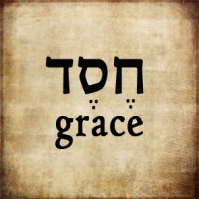
The Hebrew language has a word for this loyal love that is richer and deeper than anything in English—it is chesed (KHEH-sed). It is a covenant word that goes beyond the requirements of mere duty and obligation…..it is a love that WILL NOT let me go!  It is from the root word chacad, which is to be good or kind…..”to bow down.” It is a picture of God coming down to where we are (in the person of Jesus)  and providing us the Way of Salvation! It truly is covenant love…. an immovable, unshakable, unchanging loyalty to His covenant with us.

We also quoted Ps 23:6 yesterday “Surely goodness and loving kindness (chesed) will follow me all the days of my life…. goodness, and chesed (God’s loyalty to His covenant) will follow me ALL the days of my life.   The word”surely” is set as a seal upon it… it’s guaranteed… a done deal! It doesn’t depend on what I do or don’t do… I can add nothing of myself to it.  I am sealed with His goodness and chesed!

Psalm 107:1 is the same verse as 1 Chronicles 16:34 (above) and the same word chesed is used.  Psalm 136 is another identical Scripture….again the word used is chesed although our English uses the translation mercy.  I like Psalm 136 in the Complete Jewish Bible translation (you can go to bible gateway.com to read it)…. this translation always translates chesed as grace, and not just in this Psalm only.

One of the earliest usages of chesed is by Abraham’s servant, Eliezer, when he was sent to find a wife for Isaac. He realized that his success was because of the Father’s chesed (translated “kindness” in Genesis 24:12).  It was because of God’s covenant loyalty to his master Abraham.

Moses used this term to show why God delivered Israel from captivity in Egypt…. because of covenant loyalty (chesed). “You in Your mercy (chesed) have led forth the people whom You have redeemed; You have guided them in Your strength to Your holy habitation” (Exodus 15:13).In Ex 34:5-8 after God gives Moses the Tablets, He descended in a cloud and stood before him proclaiming who He is… verse 6 translates

In Ex 34:5-8 after God gives Moses the Tablets, He descended in a cloud and stood before him proclaiming who He is… verse 6 translates chesed as abounding in goodness! He abounds in covenant loyalty towards us.  

We see a similar statement in John 1:17  “grace (charis) and truth (reality) came through Jesus Christ.”  Jesus is the manifestation and the reality of grace and truth… of chesed (covenant loyalty). Thus we see the connection between the Hebrew word chesed (translated here as “goodness”) and the Greek charis, meaning “grace.”

Ps 117 says Praise the LORDall nationsExtol him, all peoples!
For great is his loving kindness (chesed) toward us, and the faithfulness (truth) of the LORD endures forever. Praise the LORD!…..The CJB translation says in verse 2… For his grace has overcome us, and Adonai’s truth continues forever.

Grace and truth! Jesus came full of grace and truth….this had always been His character and by extension the character of His Father. 

Chesed is covenant word ….  it is the Old Testament equivalent of the New Testament word charis which is “grace.”  Sometimes we view the Old Testament (Judaism) as a religion of laws and the New Testament (Christianity) as a religion of grace.  God extended his grace in both Testaments… both Covenants. He is the same yesterday, today and forever.  He revealed his grace to the fullest in the New Testament coming of Jesus …John 1:16-17 For from his fullness we have all received, grace upon grace…….grace and truth came through Jesus Christ…. but His grace is also displayed throughout Old Testament Scriptures

Chesed is definitely a word that begs for a deeper study than we can give to this one blog post.  Now that I know it is the equivalent of New Testament grace, it will change how I read scriptures and it will definitely cause me to do a deeper study of it.  I hope it sparked you to do a deeper study as well.

Hosea 6:6 says that God desires chesed (covenant loyalty) not sacrifice, and He desires the knowledge of Him (yada – intimate knowing as in a husband and wife) not burnt offerings.  

That reminds me of Paul’s words in Phil 3:10 that I may know (ginosko in Greek – the equivalent of the Hebrew word yada) Him and the power of His resurrection.  By going deeper, drawing nearer to Him… knowing Him more intimately… only then can I fully understand chesed.

God’s grace is a given that is always being given!  There is nothing you can do to earn or merit His grace.  It is given because of chesed… His covenant loyalty toward us…. HIS LOVE THAT WILL NOT LET US GO!

~ Robin

Goodness

good father 3      This Hebrew month of Tevet is a month filled with the goodness of God from beginning to end (see blog Tevet – 5775 (2015) and Tevet – 5774 (2014)

God is a good God… He can’t help but pour out His goodness on us all the time!  The word good, which in the Old Testament is the Hebrew word tov, is listed 562 times.  Strong’s defines it as favorable, pleasant, festive (I like that one!), pleasing, well, better, right, best. Some of the translations in the KJV are beautiful, best,  bountiful, at ease, joyful, prosperity, ready, wealth.   In the New Testament, the Greek word for good and goodness is “agathos” and is mentioned 101 times.  It describes goodness as something that originates from God and is empowered by Him in our lives, through faith.  Good originates from God and is empowered by Him in our lives… I really like that!

The Psalms mentions good in connection with these things….

  1. God… He is good!
  2. having life and adding to thatlong life
  3. God’s name
  4. His loving-kindness
  5. drawing near to God… He is good and releases good into our lives
  6. increase… gotta love this one!
  7. giving thanks to God… again like #5 not only is it good but “giving thanks” is a releaser, releasing even more good into our lives!
  8. God’s judgments… it doesn’t say judgment is good, it says God’s judgments are good because He is good!
  9. God’s mercy
  10. God’s dealings with us ….I especially like this one!! 
  11. It is good to dwell in Unity…. ooh this one is really good, and our lives are good when we walk in unity… I did a study on this not too long ago…. 
  • unity is: to be in tune or in sync with one another.  All going the same way, headed in the same spiritual direction together.
  •  “to breathe” or “to breathe spiritually together”. Breathing together speaks of covenant relationship… becoming one (Jn 17:21).
  • it is not based on likes and similarities… it is having one heart and one mind

12.  God’s spirit

The Psalms also say….

  1. that to find goodness we are to look to God – because there is no good without Him
  2. that God sends blessings of goodness to us
  3. that He makes goodness follow us
  4. that we are to taste and see that God is good
  5.  when we choose God we will lack no good thing in our lives
  6.  God gives good things

Truly, life is good because God is good!  Life is not supposed to be hard for us…. Prov 13:15 says that the way (or life) of the transgressor is hard (and continues that way).  We are not transgressors, we are righteous… in covenant with God.

  • Jeremiah 29:11 tells us He has good plans for us.. plans that give us a hope and a future.
  • Psalm 23:6 tells us that goodness and covenant loyalty (God’s loyalty to His covenant toward us)  follow (pursue us, chase us down) us ALL the days of our life.
  • Psalm 103:5 says He satisfies (fills me to full) my life with good things.

That’s not to say that life is always sunshine and roses.  Many in the Bible had circumstances in their lives that didn’t appear to be good… Joseph, David, Daniel, etc… but God’s goodness was still working in their lives in the midst of those circumstances… producing favor in these circumstances and using it to fulfill His destiny in their lives!   The root word for tov is “tet-bet” which means preparing something to receive.  God is always preparing us to receive more of His goodness…. preparing means to set us up or establish us.  Good in Hebrew means working the way God created it to work….  functional, kind of like a well oiled and tuned machine….. whereas evil which is “ra” which means dysfunctional.

God is always at work in our lives setting us up and establishing us to receive even more goodness than He has already poured out on us and causing all things to work together for good (Rom 8:28) the way He designed and purposed (Eph 1:4, 2 Tim 1:9, and Eph 2:10 just to name a few) for us.

1 Chronicles 16:34  O give thanks to the Lord, for He is good…….Good in this scripture is called an absolute noun, meaning it follows another noun forming a single idea.   Good is not an attribute of God. “Good” and God are one single thought. There is no “good” separated from God and then associated with Him. “Good” and God are the same thing…. good is who He is. He can’t be anything but good to you!  

life is good

Today begin looking at your life as good… regardless of your circumstances.  Begin confessing His goodness over your life today… saying….”My life is full of God’s goodness…  it is pleasant, it is festive, it is truly His best given to me!  My life is beautiful, it is bountiful it is at ease and full of joy.  My life is full of prosperity, wealth, and abundance.  My life is full of His good plans, full of hope and a future.  His goodness is chasing me down and pursuing me.  He is filling my life with good things.  God is preparing me today to receive even MORE of His goodness.  My life functions the way He designed and purposed it to function… there is no dysfunction in my life.  Truly, my life is good because my God is Good!

~ Robin

Tevet – 5775 (2015)


chesedMy mom nicknamed me Pollyanna Sunshine when I was little… because I have always had an abundance of optimism.  Truly it’s a gift from God that I cherish. I have always tended to always look at things through a heart of hope.  I love just simply believing what God says and looking for His goodness… His redemption in all things.  I’m learning to read the Scriptures through this lens of redemption… through my Father’s eyes.  We will always find grace in His eyes…..Noah found grace in the eyes of the LORD 

When I’m studying the Hebrew months I look for goodness and hope… for something that encourages and causes me to grow higher in Him. Each month was given by God with a unique purpose and is designed to release a blessing of revelation of His goodness into our lives.  I pray that my study of this month and this season gives you fresh hope of the goodness of God and all that He has for you.

Tonight  we enter into not only a new month on the Hebrew calendar, Tevet (Dec 13th – Jan 10th).. but also a new season, Winter.  Winter is the season to plan for increase in the next season.  Tevet is the 10th month on the Hebrew calendar… 10 is a number of divine order … 10 is also 5 + 5… five being the number of grace or in this case a double portion of grace.  This month walk in the double portion of grace available for you… choose to walk in the fullness, in the grace that Jesus made available for us.  He paid it all so that you could have it all!  It’s a free gift (Eph 2:8).

The first two letters in the word Tevet is “tov” which is the Hebrew word for good and it is followed by the letter tet which is also a letter connected to the word good…. so the word Tevet from beginning to end is a word full of God’s goodness.

While I LOVE the Christmas season,  I realize not everyone enjoys it.  It can be a time of bitter disappointments, sadness over loved ones gone, rejections of family members, depression, etc.  It can also be a financially stressful time for many.  But in this month of Tevet, let’s declare it as a month of God’s goodness from beginning to end.. allowing Him to lavish us with His goodness, His grace, and His favor.

Tevet is also connected to the Hebrew letter “ayin”.  Ayin means the eye.  This month purposely choose to see things through the Father’s eyes.  Seeing circumstances through the eyes of faith and hope… and seeing others through the eyes of love, grace, and redemption.  Read the scriptures through the lens of the finished work of the Cross and the Resurrection… it will change how you read it!

Each month is associated with a tribe of Israel.  The tribes were divided into four groups of three.  This Winter season included the three tribes:  Dan (the leader of this group), Naphtali and Asher.  They formed the “rear” guard of the camp and were the ones to watch out for the enemy attacking the camp from behind.‭ ‬These three formed the rear guard, not because of military skill but because they brought the glory of God.  They were the most creative of the tribes… Dan were skilled craftsmen in all kinds or artistic work, Naphtali brought forth beautiful words, and Asher caused the land to flourish.

This Winter season let’s understand that His glory is our rear guard  (Is 58:8)…. knowing that we are His most artistic work, and He is speaking over us such beautiful words and causing us to flourish in the land.  

Dan is the tribe connected to Tevet.  Dan in the Hebrew means to judge.  Dan’s ensign was the eagle!  Dan is one who can see the prey afar off‭ ‬-‭  the ‬one who soars on high in the Spirit and get the heavenly perspective on things.‭ ‬His judgement takes in the full scope of the scene and from his viewpoint,‭ ‬he is able to objectively give good direction and accurate assessments of situations.‭ ‬As a result,‭ ‬he is called to judge Israel.‭

Let’s judge correctly this month… soaring on wings of eagles and judging things through God’s eyes of love and mercy…..of goodness….. of grace.

May this season be full of the goodness of God, full of His glory (Ex 33:18-19)…… Merry Christmas (Celebration of Christ) from our family to yours!

~ Robin

Declarations for the month of Tevet:

  • God is good and He has lavished me with His goodness and abundance IN CHRIST
  • This month of Tevet is full of goodness, grace, and favor from beginning to end
  • This month I look at my circumstances through my Father’s eyes… eyes full of faith and hope.
  • This month I walk in an abundance of grace….. grace upon grace!
  • This month I see others through the eyes of love, grace, and redemption… seeing them as the Father sees them.
  • This season, God’s glory is my rearguard… I am His most artistic work, He speaks over me with beautiful words and causes me to flourish in the land.
  • This season, I soar in the Spirit and get the Heavenly perspective on things.
  • This season I judge correctly…  judging things through God’s eyes of love and mercy, of goodness….. of grace.